
When did festivals stop being free?
Look I’m South Indian. My ancestors were temple priests. Dad recited the mantras and quoted the Veda’s like nursery rhymes. So yes I’ve been doing the pooja’s and aarti’s since childhood. It used to be so fun when we were young.
But that was till the WhatsApp forward got invented and the temples discovered venture capital.
It’s Navratri season. My Instagram feed is split between people posting #blessed selfies in designer chaniya cholis costing several thousands and lakhs even and me wondering when and why Maa Durga started charging like a five-star hotel.
People are now consuming spirituality on EMI and, the essence of connection is often overshadowed by financial considerations, the commodification of spiritual experiences. There used to be a time when visiting temples was free. All one needed was devotion in the heart. But now?
Basic darshan: ₹200. Want to sit? ₹500 extra. Skip the line because you can’t stand behind aunty with her entire building society? ₹1000. The “influencer package” with proper lighting for your Reels? Beta, take a loan. What’s the big deal.
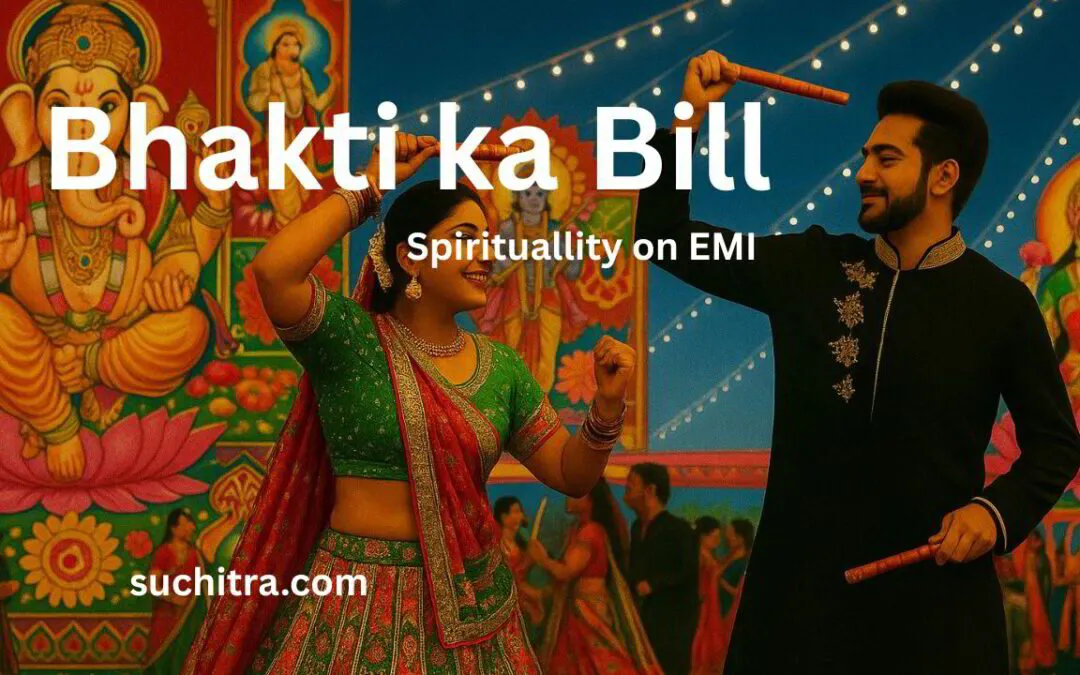
There are garbas and Ganpati pandals where they have different coloured wristbands for different levels of devotion. Gold wristband = closer to God. Silver = spiritually middle-class. Bronze = you get to see someone’s back and say you attended.
Our relationship with faith is being redefined through the lens of how deep our pockets are.
Even our God’s have subscription tiers now, and temples have become brands.
Remember when your biggest festival expense was new clothes and some extra sweets? Now you need a financial planner for moksha. XL sheets and PPT’s
The local Ganpati mandals and Durga Puja’s and Garba organizers send out press releases. With sponsor mentions. Apparently Lord Ganesha endorses organic decorations and artisanal modaks (₹200 each, minimum order 50).
We’ve gone from “Ganpati Bappa Morya” to “Ganpati ke naam Chori kara! sponsored by Tanishq Jewellers.”
The Sri Mandir App- India’s virtual temple place? Coaxing you to invoke the blessings of a 1000 Gods for every imagined occasion or peril? That’s the brainchild of Nandan Nilekani’ – the former Infosys founder. Need any more proof of how big a business religion in India is? They have apparently raised another 20 million or so in funding.
And then theres Instagram _ India’s most glamourous mandir, Every priest has a Ring Light. Every temple has a social media team. The evening aarti gets livestreamed with multiple angles like it’s Bigg Boss.
I saw a temple selling “blessed photo packages” – professional photographer captures your spiritual moment for ₹2000. Because if your bhakti isn’t camera-ready, did it even count?
Look, I’m not against progress. I’m all for it. But when devotion needs a credit card, something’s wrong.
Ultimately, this conversation calls for a reassessment of our priorities in spirituality.
Faith was always democratic. Rich uncle, building watchman, college student – everyone could show up, light an agarbatti, sing off-key, and feel connected. Now we have first-class dharma and cattle class segregated spirituality.
What if we returned to the original model? When God ran a free-for-all spiritual feast?
Dancing till your chappals broke in the society compound. Sharing prasad that Mrs. Sharma made with love, not some catering service. Kids running around, messing up the “aesthetic” but adding actual joy.
Maybe the most divine moments happen when you’re sweating in your cotton kurta, voice hoarse from bhajans, too lost in the moment to pose for content.
God doesn’t need a rebrand. We do. The best spiritual experiences cost nothing but demand everything – your presence, your honesty, your willingness to look foolish while dancing to dhol beats.
Let the temples keep their premium packages. I’ll take the chaotic, perfectly imperfect version of devotion.
Because when you need to check your bank balance before your bhakti, the cosmic customer care centre has seriously malfunctioned.
Now please excuse me while I go dance badly to free Navratri songs on YouTube. The neighbours will complain, my moves will embarrass my ancestors, but my joy will be real.
And that, thankfully, is still free.